
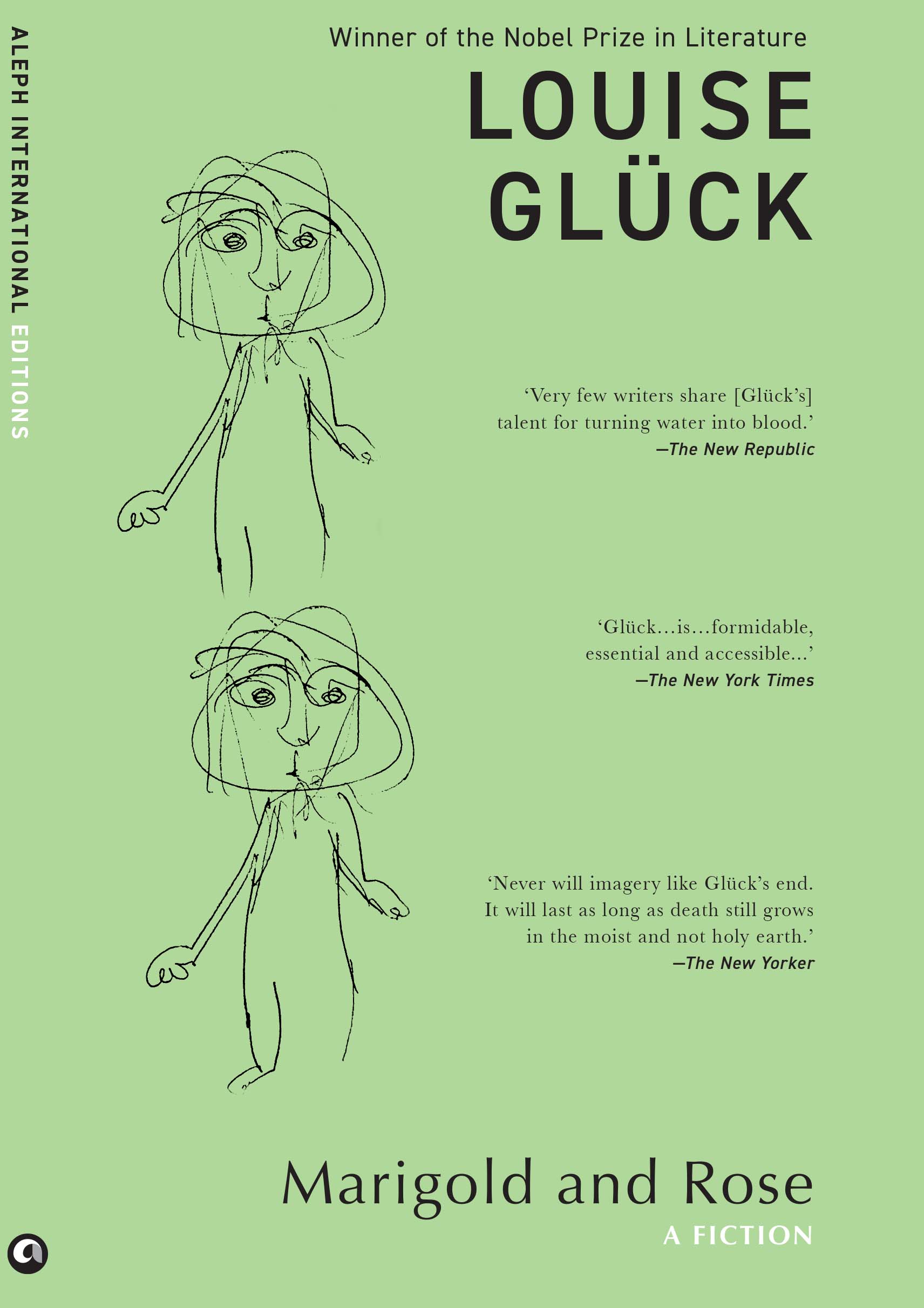
Nobel-winning poet Louise Glück’s only published piece of fiction, Marigold and Rose, is a hypnotic novella about the eponymous twins’ first year in the world. In deceptively simple, tender prose, Glück portrays the pre-linguistic inner lives of Marigold, who is ‘the thinking one’, and Rose, who is ‘everything else’.
Even in infancy, Marigold longs for adulthood with its ‘vast cargo of words’. She has already started writing a book in her mind; she needs ‘something that [stands] for herself as Rose [stands] for Rose’. Rose, on the other hand, is sociable, curious, and self-assured. She is the twin who learns to breathe first, so she can teach her sister.
In one year, the twins go from being ‘tadpoles’ to ‘actual miniature people’ who can babble, crawl, and drink out of cups. As Rose learns to talk, Marigold learns to watch. Meanwhile, Mother and Father have their own qualms about work and house-buying, Grandmother dies; by and by, the safety of infancy disappears, and the twins must grapple with the ‘chaos and imprecision’ of the world of grownups.
Marigold and Rose is a profound meditation on childhood, language and its limits, individuality, and wholeness, by a writer of prophetic vision.


Louise Glück (1943–2023) was the author of several acclaimed essay collections and books of poems. She won the Nobel Prize in Literature in 2020. Her other awards include the National Humanities Medal, the Pulitzer Prize for The Wild Iris, the National Book Award for Faithful and Virtuous Night, the National Book Critics Circle Award for The Triumph of Achilles, the Bollingen Prize for Poetry, the Los Angeles Times Book Prize for Poems 1962–2012, and the Wallace Stevens Award from the Academy of American Poets. She taught at Yale University and Stanford University.
Read More