
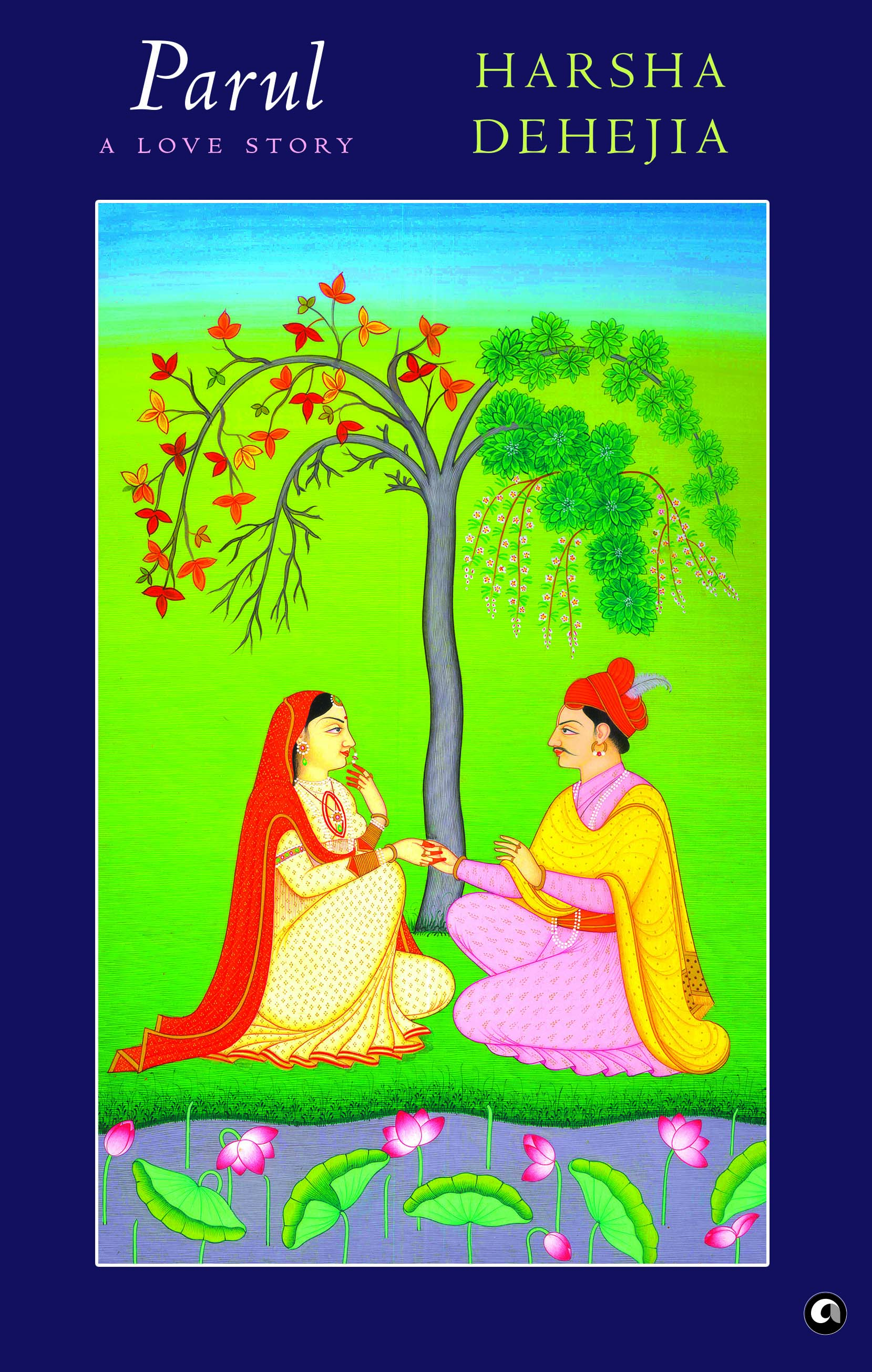
On the night of the full moon, beneath the shades of the Parijatak tree, Parul would meet Prafull, once every month. The two are mirror opposites. He is a philosopher, learned and rational, steeped in the cool abstractions of Advaita Vedanta. She, on the other hand, lives by instinct and feeling. Her world revolves around rangolis, embroidered old fabrics, the birds in her garden, art, and beauty. Prafull wants to transcend the world, but Parul wants to touch it, live in it, celebrate it. Their meeting changes both their lives.
The relationship between the two blossoms and deepens into something intense and complicated. Their courtship unfolds across a single ritual year, beginning in Chaitra and stretching through to Phalgun, with the author using the two protagonists as large allegories for two opposing philosophical schools of thought. Then, one full moon, Parul leaves. What follows turns the novel from love into longing—a pilgrimage that takes Parul from a Radha–Krishna temple to a Sufi dargah in Ajmer, then to a Himalayan village where a painter still practises the almost-forgotten art of the Barahmasa, the old poetry of the twelve months of parting. Years later he finds her by accident, in a museum gallery, standing before a stone image of Krishna, going by another woman’s name. And throughout, the novel wrestles with a fundamental human question: the love that survives longing, is it the same love that began it, or does longing transform the very idea of love altogether, rendering the two irreconcilable?
Parul is Harsha Dehejia’s retelling, in the form of a modern love story, of one of Indian aesthetics’ oldest arguments—between shringara and bhakti, the sensual and its illumination, the classical and the folk, presence and viraha. Sanskrit verse, Kangra miniatures, Sufi lore, and the seasonal songs of women whose husbands are always away flow throughout this book, as do themes of desire, certitudes, beauty, and above all, love. Between Parul’s stubborn earthiness and Prafull’s slow, reluctant unlearning of his own certainties, Dehejia has written a wonderful philosophical novel about how ordinary devotion, whether it is to a person, a season, or even a garden, can become a kind of knowledge in its own right.
Harsha Dehejia has a double doctorate, one in medicine and the other in ancient Indian culture, both from Mumbai University. He is a practising physician and professor of Indic studies, with more than thirty books, four films, and several curated exhibitions to his credit. His main interest is in Indian aesthetics. He divides his time between India and Canada.
Read More